



How Regular Exercise Benefits Mental Health: A Key to Better Well-being
Exercise isn’t just about building physical strength or improving fitness—it’s also a powerful tool for enhancing mental health. Regular Exercise Benefits: Physical activity has been proven to help manage stress, reduce anxiety, and improve mood. Whether you’re walking, cycling, doing yoga, or hitting the gym, each workout session provides a wealth of mental health benefits that can last long after you finish.
Regular physical activity is not only essential for maintaining physical health but also plays a critical role in improving mental well-being. According to the World Health Organization (WHO), exercise can reduce stress, alleviate symptoms of anxiety and depression, enhance mood, and improve sleep quality. Engaging in physical activity helps to release endorphins—natural mood boosters—that can significantly reduce feelings of tension and improve overall emotional health.
1. Reduces Stress and Anxiety
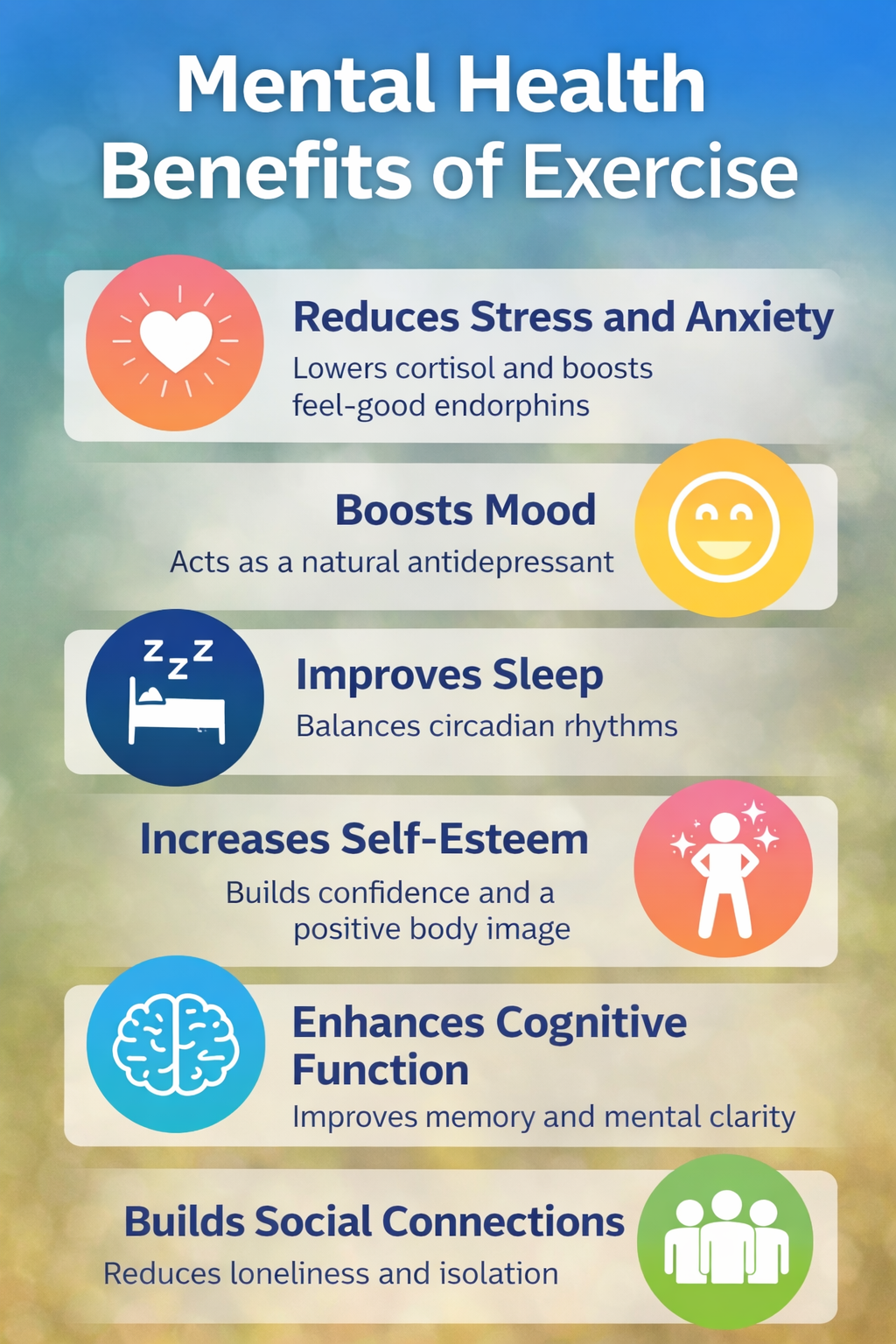
One of the most immediate benefits of exercise is its ability to reduce stress and anxiety. Physical activity helps to lower the body’s levels of the stress hormone cortisol, while simultaneously triggering the release of endorphins, the body’s natural mood elevators. These “feel-good” hormones can help calm nerves and provide relief from anxiety and tension. Even a brisk 20-minute walk can make a significant difference.
2. Boosts Mood and Fights Depression
Regular exercise can have a lasting positive effect on mood and is an important factor in managing depression. Studies have shown that people who exercise regularly have a lower risk of developing depression. Exercise can also serve as a natural antidepressant, as it helps to combat the chemical imbalances associated with mood disorders. It’s not just about the workout itself, but the consistency and routine of staying active that plays a key role in mental well-being.
3. Improves Sleep Quality
Mental health and sleep are deeply interconnected. Exercise helps regulate sleep patterns by promoting deeper, more restful sleep. For those who struggle with insomnia or irregular sleep, regular physical activity can enhance sleep quality by balancing the body’s circadian rhythms. A good night’s sleep is crucial for mental health, as it helps improve cognitive function, mood, and overall emotional stability.
4. Increases Self-Esteem
Engaging in regular exercise can also improve self-esteem and body image. As you become stronger and fitter, your confidence grows, which positively impacts your mental outlook. This boost in self-esteem is particularly important for individuals who may be struggling with feelings of inadequacy or low self-worth.
5. Enhances Cognitive Function
Exercise doesn’t just benefit the body—it also sharpens the mind. Physical activity increases blood flow to the brain, improving cognitive function, concentration, and memory. Regular exercise can also enhance brain plasticity, helping to prevent cognitive decline and mental deterioration, which is especially beneficial as we age.
6. Builds Social Connections
Participating in group fitness classes, team sports, or even going for a jog in the park can provide an opportunity to meet new people and form social connections. Social interaction plays a vital role in mental health, helping to reduce loneliness and feelings of isolation. Building a supportive social network through exercise can provide additional mental health benefits.
Conclusion: Make Exercise Part of Your Mental Health Routine
Regular Exercise Benefits on mental health are well-documented and impactful. Whether you’re looking to reduce stress, manage anxiety, or just improve your overall mood, regular exercise is a simple and effective way to boost your mental well-being. Start small, stay consistent, and soon you’ll experience the positive changes that exercise can bring to your mental health.
FAQs
Q1: How much exercise should I do for mental health benefits?
A: Aim for at least 30 minutes of moderate exercise, such as walking, cycling, or swimming, at least 3-4 times a week.
Q2: Can exercise replace medication for mental health?
A: While exercise can greatly improve mental health, it should not be seen as a replacement for medication. It can complement treatment but always consult with a healthcare professional for personalized advice.
Q3: What types of exercise are best for mental health?
A: Aerobic exercises, such as running, swimming, and cycling, are highly beneficial for reducing anxiety and boosting mood. Yoga and strength training also have positive effects on mental health.
Q4: Will exercising help with stress management?
A: Yes, exercise is a highly effective way to manage stress, as it releases endorphins and reduces cortisol levels, leading to a calmer state of mind.